Friday, May 30, 2008

Works Cited

Works Cited
Mathews, Daniel. Rocky Mountain Natural History. Portland Oregon. Raven Editions. 2003.
Moose. 2008. Wkipedia. May 28, 2008. http://en.wikipedia.org/wiki/Moose
Moose Reproduction. 2008. Northwest Territories. Wildlife division. February 13, 2008. http://www.nwtwildlife.com/NWTwildlife/moose/reproduction.htm

Thursday, May 29, 2008

Observation 8

Site/Location: Back Yard/ Rafter J
Date: 5-29-08
Time: 8:10 pm
Temperature: 47 Degrees F
Weather: Mostly Cloudy, Chilly
Soil: Wet from rain
Hypothosis: It will start to warm up here in Jackson because it is getting closer summer.

Observation 8

It stopped raining for at least a little while. Today I only saw a robin. But, I did see the yellow headed black bird earlier today. While I was observing I noticed that it was much colder in the evening then in the afternoon, it was probably because the sun was about to good down behind the mountains. The leaves on the trees and bushes are now fully bloomed. They bloomed so fast because of the moisture from the rain helped them grow. There is also more colors in the trees like green, yellow, and orange. The plants in my garden are starting to grow and pop up in some places, like the willow bushes, daises and dandieloins. 

Observation 7

Site/Location: Back Yard/ Rafter J
Date: 5-28-08
Time: 5:00 pm
Temperature: 43 Degrees F
Weather: Sunny, warm, mostly cloudy
Soil: Wet from rain
Hypothosis: More flowers like dandilions, tulups, daises, and leaves on tree will start to grow                           more because of the rain and some of the sunshine jackson has been getting in                                the past week.

Observation 7

Yes! It finally stopped raining, a least for a little bit. The grass is so much longer than my last observation. Its longer because of the rain we have been getting and the few bits of sunshine every now and then.  Also the grass is much greener. I also noticed that there was more insects like spiders, ants, and flies crawling around in it. There was some competition for food between these insects. There are no more dry spots in my yard, because it has gotten a lot of moisture from the rain. The usual birds are out, the robins, sparrow, and magpies. But, I did see a new bird, it was a yellow headed black bird. The yellow head black bird is much smaller then some of the other birds in my observation area. On the honeysuckle bushes I noticed that berries were started to grow on them. 

Wednesday, May 21, 2008

Observation 6

Site/Location: Back Yard/ Rafter J
Date: 5-21-08
Time: 5:01 pm
Temperature: 40 Degrees F
Weather: Raining, cloudy, cool
Soil: Wet from rain
Hypothosis: Animals won't be able find food because of the weather. Because it is raining survival needs will lower, there's less food, not enough shelter, and not a suitable climate,because it is raining and cold.

Observation 6

It is raining outside. What it thought was weird was that the birds like the robins, sparrows and magpies were still outside, singing. I thought they would trying to find shelter to stay warm. But, there was competition for food and shelter. There was interspecific and intraspecific competition. Birds off the same species were competing for food and shelter. Birds of different species were competing also. 

While it was raining plants were getting watered. That means their going to get greener if it keeps raining and then the weather clears up and gets sunny for the plants to grow. So, then animals like birds, and deer can get the food and nutrients they need.  
 

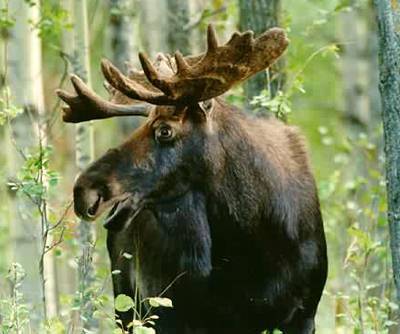
Moose


Alces alces, also known as a Moose. Moose are very frequent visitors to my back yard. They are the largest member in the deer family. Rafter J is an excellent habitat for moose. It has all the survival needs for this mammal. There’s food, water, shelter, and a suitable climate. For food, Rafter J has willow bushes to feed themselves and their young. Flat Creek runs through this community, so the moose have water. Moose can use the heavy bushes as shelter. The climate is good too. It rains so that can give the plants water and so they can live and give the moose food.

Moose are very large animals. They are about 6 to 7 feet tall and weigh from 600 to 800 pounds. They are brown, because they need to blend in with their surroundings so predators can’t get them. Moose have long legs because they need to get though the tall snow in the winter. Also they need to see over tall grass and bushes. This in a very good adaptation for these animals to help them survive. Moose antlers are important because they can use them in many different ways. They use them to protect themselves from predators, to fight other moose for a female moose, and when their antlers fall off, smaller animals can eat them for calcium. Moose only have a few predators. A pack of wolves can be a threat to females with calves, because the baby is weaker than their mother and that could slow them down. A hungry bear could also pose a threat to old, weak moose and young calves. Moose don’t travel in packs, they either journey by themselves or with their young.


Tuesday, May 20, 2008

Observation 5

Site/Location: Back Yard, Rafter J
Date: 5-19-08
Time: 4:52pm

Temperature: 72 degrees F
Weather: Very Warm/ Partly Cloudy
Soil: Wet from my mom watering
Hypothosis: Mountains are going to get more plant life, because it is already getting green. The snow is melting, and its sunny and getting much warmer.


Obsevation 5

It was very warm at my obsevation site. The robins and sparrows were out as usual. I noticed that the honeysuckle bushes started to grow berries and leaves. The berries are red and I knew before this oberservation that those berries are poisonous to humans. Also I noticed that now the big willow tree by my tree house is budding as well as the aspen trees. The grass is much greener since my last obervation and so the hills and mountains in the distance.

Friday, May 16, 2008

Observation 4

Site/Location: Back Yard, Rafter
Date: 5-15-08
Time: 4:34pm
Temperature: 61 Degrees F
Weather: Sunny, Warm
Wind: Slight Breeze
Soil: Dry
Hypothosis: More animals will start to come into area, so there will be more interations between
the animals.


Observation 4

It was really warm at my obersevation area. So, more animals are out so that means there is more biodiversity. I saw mostly birds, like magpies, robins, and sparrows. There are a few dandi lions growing and there grass in my yard and common area is getting taller and greener. Finally all the snow is gone in the yard, there is still some in the mountains though. When all the snow melts more animals like deer, elk, bears, and moose will come into the valley for food.